How retarders work in a marshalling yard
What happens in a marshalling yard?
A marshalling yard sorts freight wagons into new trains. An arriving train is pushed up onto a hump, the wagons are uncoupled one at a time and roll by gravity down towards one of many classification tracks. Points steer each wagon to the right track.
The problem is speed. A heavy, free-rolling wagon runs faster than a light wagon with high rolling resistance. Without braking, wagons collide too hard when they couple, damaging goods, wagons and track. Wagons that roll too slowly stop before reaching the row and block the track.
The job of the retarder
The retarder solves this. It sits in the track, on the hump descent and out in the classification tracks, and slows each wagon to a suitable speed before it reaches the wagons already standing there. The result is soft coupling, evenly filled tracks and staff who no longer need to work close to rolling wagons. Read more about DECEL's solution.
Three types of retarder DECEL works with
Spiral retarders
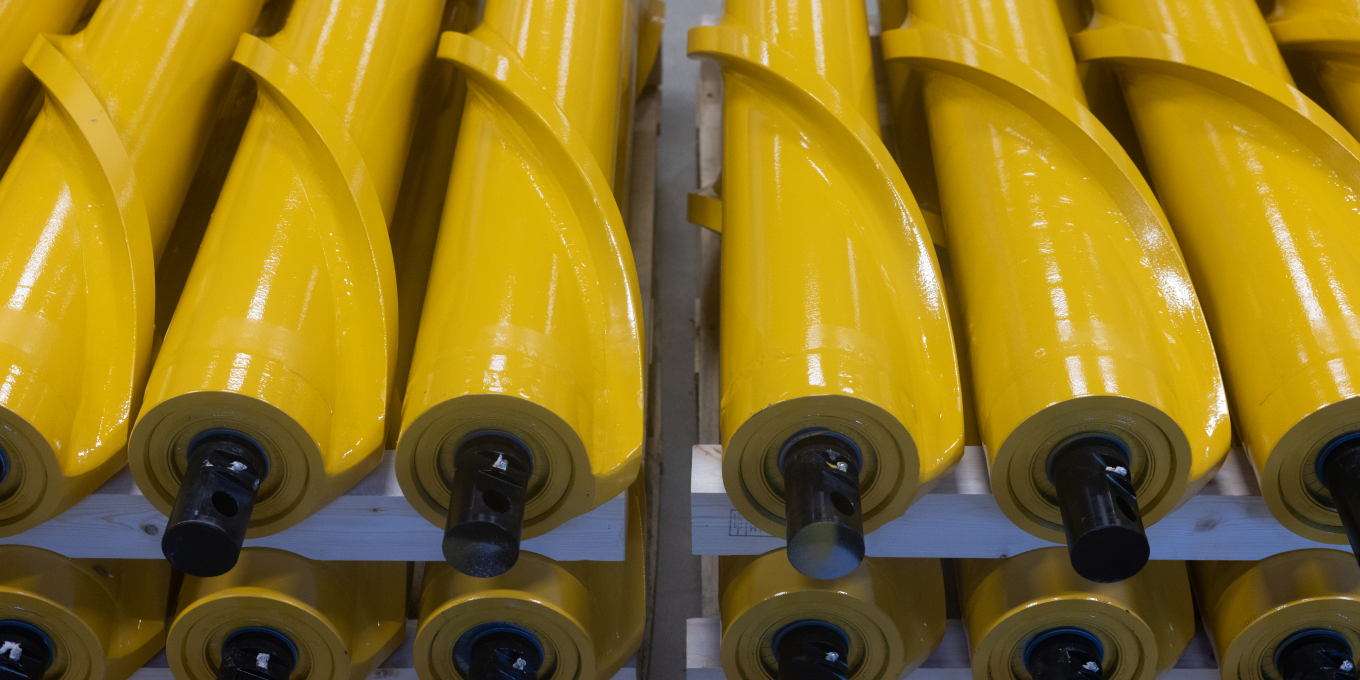
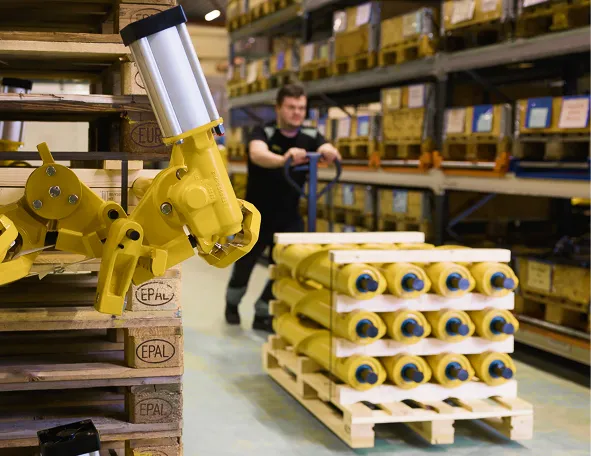
The spiral retarder is a hydraulic unit mounted along the inside of the rail. As the wheel flange passes, it turns a spiral element inside the retarder, and the hydraulics provide resistance that slows the wagon. The braking effect depends on speed: a wagon rolling above a set speed is braked, while a wagon already rolling slowly passes almost unbraked. That makes the spiral retarder self-regulating and well suited to classification tracks, where many units are installed in sequence. At Malmö freight yard in Sweden, for example, DECEL added constant speed retarders across the whole yard to complement two beam retarders.
Beam retarders and pneumatic retarders
Where more braking force is needed, often directly after the hump, beam retarders press brake beams against the wheels. They are usually controlled pneumatically. DECEL has supplied pneumatically controlled systems in Ånge, Sweden, and Tampere, Finland, and is supplying new control for 1,500 pneumatic retarders at Sävenäs in Gothenburg.
Control systems and yard control
In larger yards the retarders are controlled from a tower or control centre. The control system decides how hard each wagon should be braked based on its weight, rolling resistance and how far it has to travel in the classification track. DECEL supplies yard control systems as part of complete deliveries, as at the marshalling yard in Kazakhstan.
Retarders compared with brake shoes
The traditional method is brake shoes (skids): staff place a shoe on the rail, the wagon rolls onto it and is slowed by friction. The method works but has three problems:
- Safety. Staff work close to rolling wagons.
- Precision. The braking effect depends on where the shoe is placed and how heavy the wagon is, so it is uneven.
- Capacity. The method is labour intensive and limits how many wagons the yard can handle.
Retarders brake automatically, evenly and with no staff in the track. That is also the direction regulations and work environment requirements are pushing.
What DECEL does
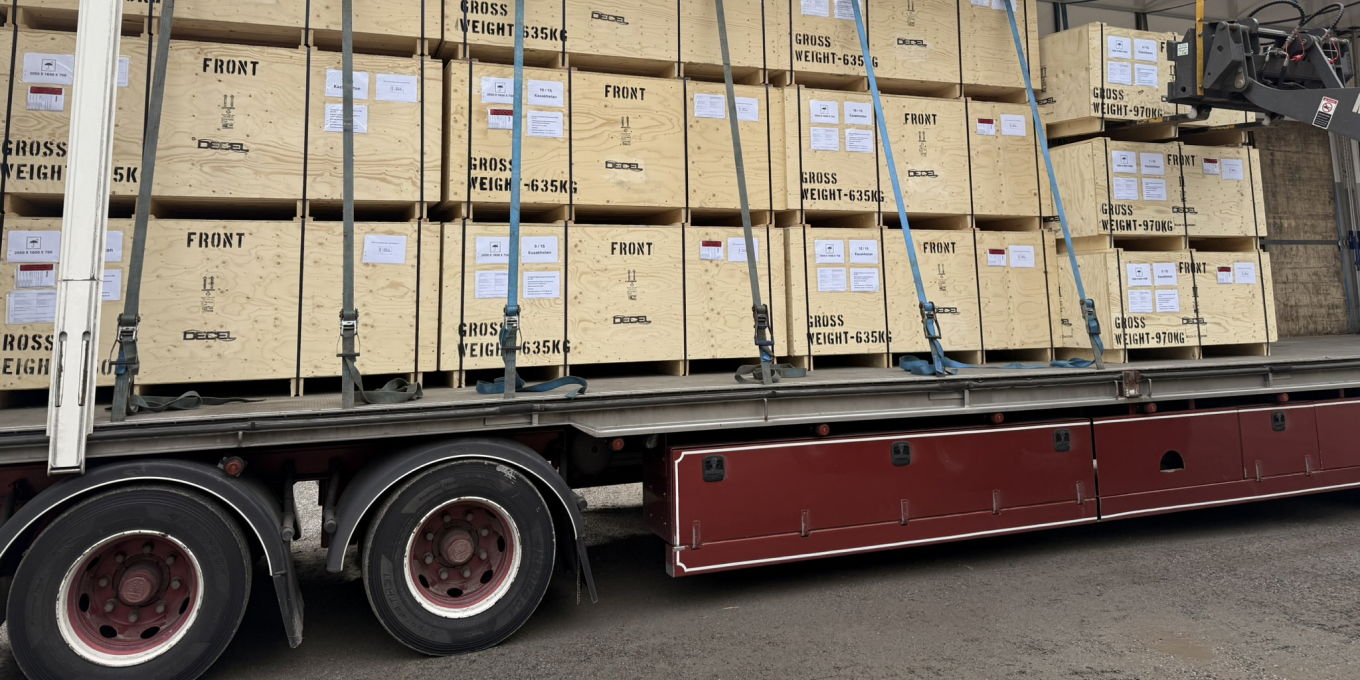
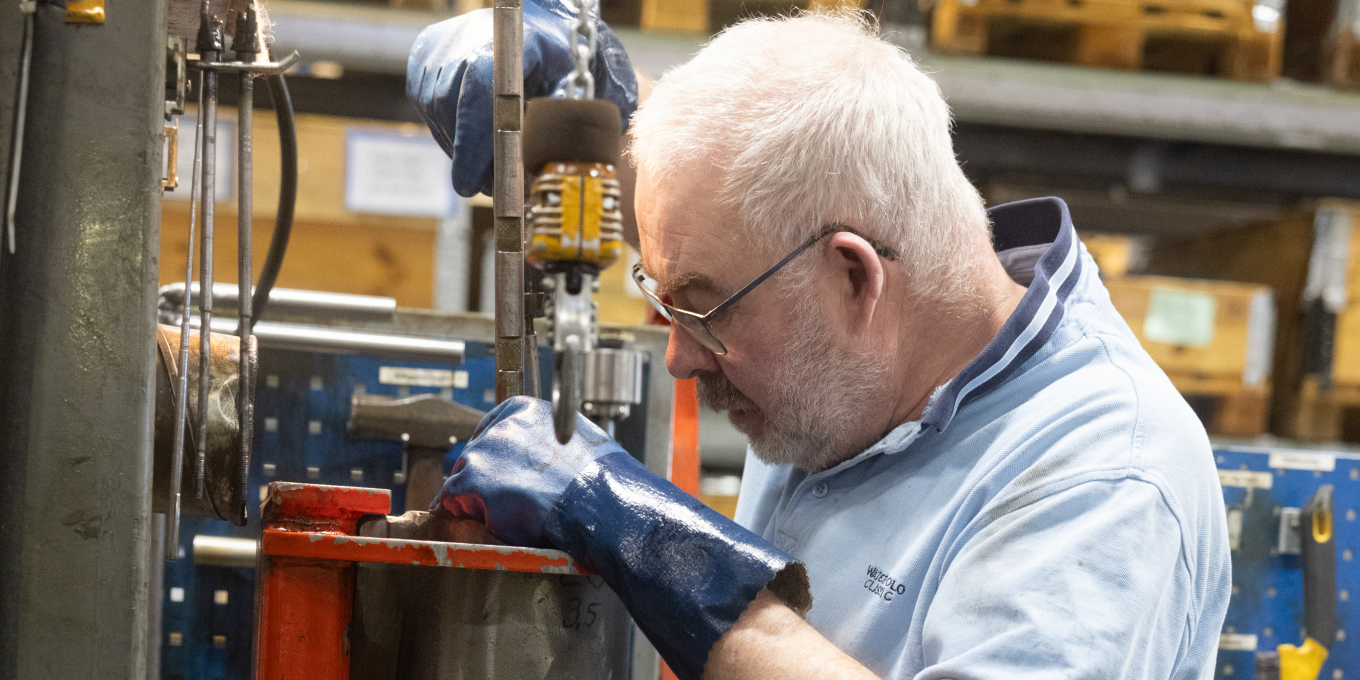
DECEL designs the braking solution for each yard, manufactures the retarders in Överhörnäs near Örnsköldsvik in Sweden, installs and commissions them, and refurbishes and maintains the equipment throughout its service life. DECEL has its roots in the spiral retarder system and on 1 August 2023 took over Bosch Rexroth's retarder product line, formerly Hägglunds Drives. More than 15,000 units have been produced since 1973. Customers include Trafikverket (the Swedish Transport Administration) and the state railways of Sweden and Finland.
Less wear and lower noise follow directly from controlled braking. Read more about sustainable shunting.
About the author

Niklas Hörnell
CEO
Niklas Hörnell is the CEO of DECEL, which manufactures retarders and control systems for marshalling yards in Överhörnäs, Sweden.
Niklas Hörnell
CEO
The technology that transforms your yard

Need more information?
Contact one of our experts.
What is a retarder?
A brake mounted in the track that slows free-rolling railway wagons, for example in a marshalling yard. The wagon needs no braking of its own.
What is the difference between a spiral retarder and a beam retarder?
A spiral retarder is hydraulic, self-regulating and only brakes wagons above a set speed. A beam retarder presses brake beams against the wheels with greater force and is usually operated from a control system.
How many retarders does a marshalling yard need?
It depends on the number of tracks, their gradient and the traffic. DECEL has supplied 550 retarders to Ånge, 850 to Helsingborg, 960 to Gävle and 1,642 to Tampere.
How long do retarders last?
With service and refurbishment, more than 40 years. DECEL's retarders in Gävle have been in service since 1991.